
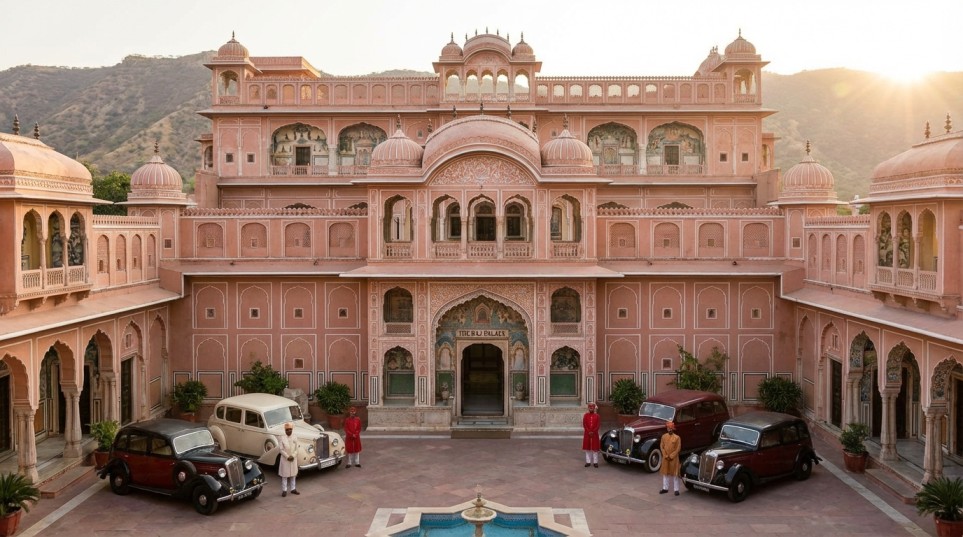
Heritage Hotels in Jaipur (2026): Best Palace Stays, Havelis & Budget Picks
Royal Palace Stays, Charming Havelis & Strategic Budget Picks
Jaipur, the flamboyant capital of Rajasthan, is more than just a pin on a map—it is a living museum. While the Hawa Mahal and Amer Fort are the headliners, the true soul of the “Pink City” is found behind the heavy wooden gates of its historic residences.
In 2026, the trend in travel has shifted from “ticking off sights” to “living the history.” Staying in a heritage hotel isn’t just a lodging choice; it’s an immersion into a 300-year-old legacy of Rajputana royalty and merchant wealth. Whether it’s a sprawling palace managed by a global luxury brand or a family-run haveli tucked away in a quiet lane, these properties offer something a modern glass-and-steel hotel cannot: a soul.
This guide provides a deep dive into the best heritage stays in Jaipur, organized by style, budget, and vibe, helping you make a real booking decision for your 2026 trip.
1. Quick Picks: The Best of Jaipur at a Glance
For those in a hurry, here is the curated shortlist of properties that consistently lead the pack in service, atmosphere, and authenticity.
| Category | Recommended Hotel | Best For… | Prime Neighborhood |
| The Gold Standard | Rambagh Palace | Honeymoons & Milestone Birthdays | Central Jaipur |
| Resort-Style Luxury | Jai Mahal Palace | Families with children (huge gardens) | Central Jaipur |
| The Design Darling | Rajmahal Palace | Photographers & Maximalist Decor fans | Central Jaipur |
| Authentic Haveli | Samode Haveli | Traditionalists & Foodies | Near Old City |
| Smart Value | Alsisar Haveli | High-end feel without the palace price | Bani Park |
| Boutique Peace | 28 Kothi | Solo travelers & Creative professionals | Civil Lines |
| Old-World Party | Narain Niwas Palace | Socialites & “Vibe” seekers | Central Jaipur |
| The Weekend Escape | Samode Palace | A total destination immersion | Outskirts (Samode) |
| Clean & Classic | Dera Rawatsar | Efficient sightseers | Bani Park |
2. Defining the “Heritage” Experience
Before booking, it is helpful to understand what you are actually paying for. In Jaipur, “Heritage” is a broad umbrella covering three distinct types of architecture:
Palace Hotels
These were the official residences of the Maharajas and the royal family. They are grand, sprawling, and usually sit on acres of manicured gardens. Expect liveried staff, peacocks on the lawns, and high-ceilinged ballrooms.
Havelis
“Haveli” translates to mansion. These were built by wealthy merchants, noblemen, or court officials. Architecturally, they are inward-looking, centered around one or more open-air courtyards. This design was functional—it kept the home cool and provided privacy for the women of the house (the Zenana).
Heritage-Style Boutique Stays
These are often newer builds or heavily renovated villas that use traditional Rajasthani craftsmanship—Araish plasterwork, hand-blocked textiles, and Jali (lattice) screens—to provide a historical feel with 2026’s modern amenities (like high-speed Wi-Fi and silent AC).
3. Choosing Your Base: Neighborhood Deep-Dive
Jaipur’s traffic is notorious. Where you sleep determines how much of your day is spent in an auto-rickshaw.
- The Old City (Walled City): This is the heart of the “Pink” action. It is chaotic, loud, and incredibly vibrant. If you want to wake up to the sound of temple bells and walk to the City Palace, stay here.
- Bani Park: Developed in the mid-20th century, this area is the “Haveli Hub.” It is residential, greener, and quieter than the Old City, but still very central. Most of the best mid-range heritage hotels are located here.
- Civil Lines & C-Scheme: The “Upper East Side” of Jaipur. This is where you’ll find trendy gin bars, upscale boutiques, and boutique guesthouses. It is the most sophisticated area to stay.
- Amer Road: Located north of the main city, this is great for those who want to be close to the forts (Amer, Nahargarh, and Jaigarh) and prefer a slightly more rugged, hilly landscape.
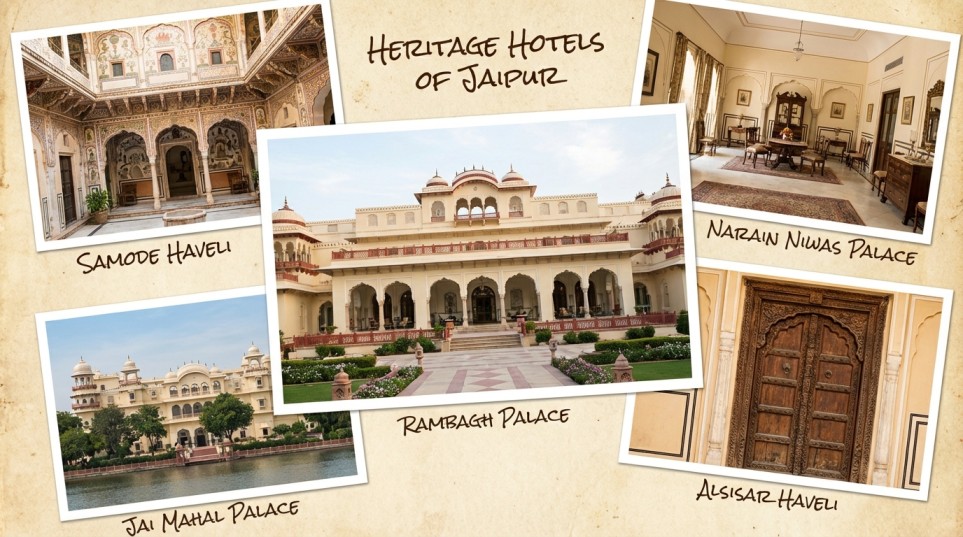
4. Luxury Palaces: Living Like Royalty
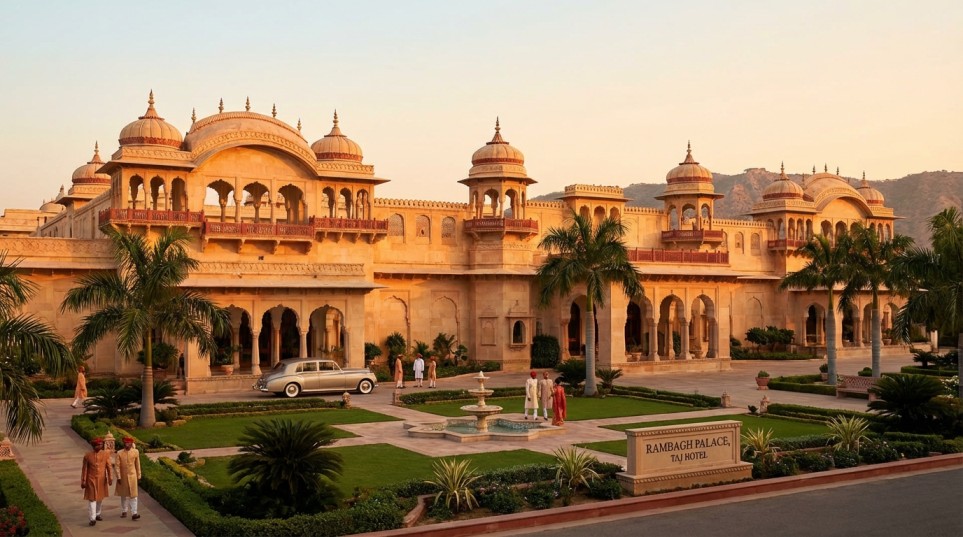
Rambagh Palace (Taj)
Often voted the best hotel in the world, Rambagh is the former residence of the Maharaja of Jaipur. This is not just a hotel; it is a 47-acre masterclass in opulence.
- The Vibe: High-octane luxury. From the moment you arrive and are showered with rose petals, you are treated as a royal guest.
- Standout Feature: The “Steam” bar—a restored Victorian steam engine converted into a lounge—and the Verandah Café, where you can watch peacocks while sipping afternoon tea.
- Best For: Those for whom “too much” is never enough. It is the ultimate choice for an anniversary or a marriage proposal.
Jai Mahal Palace (Taj)
Located closer to the city center but feeling miles away, Jai Mahal is a 1745 masterpiece set amidst 18 acres of Mughal gardens.
- The Vibe: Relaxed luxury. It feels more like a resort than Rambagh. The architecture is a stunning blend of Saracenic and Rajput styles.
- Standout Feature: The outdoor pool and the life-sized chessboard in the gardens. It is significantly more family-friendly than other luxury palaces.
- Best For: Families who want heritage charm but need space for kids to run around.
Rajmahal Palace (RAAS)
If Rambagh is “Traditional Royal,” Rajmahal is “Vogue Royal.” This boutique palace was redesigned by Adil Ahmad and is famous for its bespoke, vibrant wallpapers and pastel-colored interiors.
- The Vibe: Whimsical, intimate, and highly curated. It has hosted the likes of Queen Elizabeth II and Jackie Kennedy.
- Standout Feature: Each room has a different theme. The breakfast room, with its 50 shades of pink, is a photographer’s dream.
- Best For: Design junkies and couples looking for a chic, quiet sanctuary.
The Raj Palace
Located near the entrance to the Old City, this hotel is a member of the “Small Luxury Hotels of the World.” It feels incredibly grand because it has preserved a massive amount of its original museum-quality artifacts.
- The Vibe: Museum-living. The suites are some of the largest in the city.
- Best For: Travelers who want to stay within striking distance of the main markets and the Hawa Mahal.
Neemrana Fort Palace
Neemrana Fort Palace:-
is a prestigious 15th-century heritage hotel that offers a unique “living history” experience by blending medieval charm with modern leisure. It is celebrated for its tiered architecture carved into the Aravalli hills, providing a dramatic backdrop for travelers between Delhi and Jaipur.
- Distinctive Architecture: The property is spread across 10 to 14 levels along a hillside, featuring a labyrinth of secret passages, winding staircases, and hidden courtyards.
- Heritage Accommodations: Rooms and suites are individually decorated with traditional furniture and antiques, intentionally omitting televisions to maintain an authentic historical atmosphere.
- Leisure & Adventure: The fort features two swimming pools, sprawling hanging gardens, and a spa, alongside India’s first zip-line experience for a birds-eye view of the ramparts.
- Cultural Experiences: Visitors can enjoy sunset tea on the ramparts followed by traditional Rajasthani music and dance performances in the open-air amphitheater. Read more –Neemrana Fort Palace
5. Heritage Havelis: Courtyard Charms
Samode Haveli
Tucked away in the busy streets of the Old City, entering Samode Haveli is like stepping into a silent, scented dream.
- Architecture: It features a series of interconnected courtyards and one of the most beautiful swimming pools in Northern India (surrounded by daybeds and hand-painted murals).
- The Experience: The dining room is covered in intricate fresco work and gold leaf.
- Best For: Those who want an authentic, slightly “lost in time” feel without sacrificing luxury.
Alsisar Haveli
Located in Bani Park, Alsisar Haveli is a fortress-like mansion that offers an incredible “bang for your buck.”
- The Vibe: Masculine and regal. Think dark wood, four-poster beds, and a stunning courtyard where folk musicians perform every evening.
- Pro Tip: Their rooftop offers a great view of the Nahargarh Fort on the hill.
- Best For: Groups of friends or families who want the full Rajputana aesthetic at a mid-range price point.
Royal Heritage Haveli
Built in the 18th century as a hunting lodge for the Maharaja, this property is now run by a charming descendant of the royal family.
- The Vibe: Intimate and boutique. With only 15 suites, the service is exceptionally personalized.
- Standout Feature: The food here is often cited as the best in Jaipur. They focus on family recipes that you won’t find in commercial restaurants.
- Best For: Slow travelers and those staying for more than 3 nights.
Shahpura House
A labyrinth of beautiful balconies, domes, and terraces. Shahpura House is famous for its elaborate facade and its commitment to eco-friendly heritage preservation.
- Best For: Travelers who want a very “busy” and colorful Rajasthani aesthetic.
6. Boutique & Budget-Friendly Heritage
You don’t need a king’s ransom to enjoy Jaipur’s history. These picks focus on character and cleanliness.
28 Kothi
A minimalist’s take on heritage. While it lacks the “clutter” of traditional havelis, it uses local materials and craftsmanship to create a serene, modern-heritage hybrid.
- The Vibe: Zen. It feels like a private home.
- Note: The food is strictly vegetarian and incredibly fresh.
- Best For: Solo female travelers and those who find traditional hotels a bit too “heavy.”
Dera Rawatsar
A family-run hotel that wins awards every year for its hospitality. It is clean, functional, and features beautiful hand-painted ceilings.
- Best For: Travelers who plan to spend 90% of their time sightseeing but want a warm, pretty place to return to.
Anuraag Villa
A peaceful garden-facing villa in Bani Park. It’s simple, but the lush green surroundings and the quiet atmosphere make it a favorite for backpackers and digital nomads.
Near Jaipur: The Destination Stays
Sometimes, the best way to experience Jaipur is to stay just outside of it.
Samode Palace
Located 45 minutes from the city, this is arguably the most beautiful palace in Rajasthan. The Sheesh Mahal (Hall of Mirrors) here is even more intricate than the one at Amer Fort.
- Why stay here? It is a destination unto itself. You stay here to hike the surrounding hills, visit the local village, and live in a fairytale.
Storii Jaipur (Castle Kanota)
Film buffs will recognize this as the “Viceroy’s Club” from The Second Best Exotic Marigold Hotel. It’s a rugged, authentic castle with a world-class library and museum of arms and ammunition.
8. Essential 2026 Practicalities
The Price Guide (Estimated Per Night)
- Luxury Palaces: $450 – $1,200+ USD
- Premium Havelis: $150 – $350 USD
- Boutique/Mid-range: $70 – $140 USD
- Budget Heritage: $30 – $60 USD
The “Heritage” Reality Check
Staying in a 200-year-old building comes with quirks. To enjoy your stay, keep these points in mind:
- Acoustics: High ceilings and stone floors echo. If there is a wedding in the courtyard, you will hear it. Pack earplugs if you are a light sleeper.
- Plumbing: Most heritage hotels have modernized bathrooms, but water pressure can occasionally be temperamental compared to a brand-new Hilton.
- Layouts: No two rooms are the same. One might have a massive balcony, while the one next door has a tiny window but a larger bathroom. Always look at the specific room category photos.
- Stairs: Many havelis do not have elevators (lifts) due to structural restrictions. If you have mobility issues, always request a ground-floor room at the time of booking.
9. A Curated 3-Day Heritage Itinerary
Day 1: The Royal Core
- Morning: Explore the City Palace and Jantar Mantar (equidistant from most central hotels).
- Lunch: Baradari at City Palace for a modern take on Rajasthani food.
- Afternoon: Walk through the Johari Bazaar (Jewelry market).
- Evening: Sunset drinks at The Palladio (located in the Narain Niwas Palace grounds)—the most Instagrammed bar in India.
Day 2: The Forts & Crafts
- Morning: Amer Fort. Go early (8:00 AM) to beat the crowds.
- Lunch: 1135 AD inside the fort for a royal “Thali” experience.
- Afternoon: Visit Anokhi Museum of Hand Printing.
- Evening: A quiet dinner back at your hotel courtyard to enjoy the local folk music.
Day 3: The Hidden Jaipur
- Morning: Hike up to Galta Ji (The Monkey Temple) or visit the Royal Gaitor Tumbas.
- Afternoon: Shopping in C-Scheme for contemporary Indian labels.
- Evening: A cooking class at a local haveli or a late-night chai at Statue Circle.
10. Frequently Asked Questions (2026 Edition)
Q: Is 2026 a good time to visit? A: Yes! Jaipur has recently seen a massive upgrade in its boutique café scene and internal road connectivity. However, try to avoid the peak wedding season (late November to early February) if you want lower prices and less noise.
Q: Do heritage hotels provide modern amenities like Wi-Fi? A: Generally, yes. However, thick stone walls are the natural enemy of Wi-Fi signals. You may find the internet works perfectly in the courtyard but is spotty in your bedroom. If you are working remotely, ask the hotel about their “in-room” signal strength.
Q: Can I visit these hotels even if I’m not staying there? A: Most luxury palaces (Rambagh, Jai Mahal) allow outside guests for dinner or tea, but you must have a prior reservation to pass through the security gates. Smaller havelis usually prefer to keep their courtyards private for residents.
Q: What should I pack? A: Modest clothing for temple visits, a wide-brimmed hat for the desert sun, and one “royal” outfit—you will feel underdressed at a palace dinner in cargo shorts and flip-flops!
Final Thoughts
Jaipur is a city that rewards the curious. By choosing a heritage hotel, you aren’t just booking a room; you are becoming a temporary custodian of a story. Whether you choose the manicured lawns of the Rambagh Palace or the cozy, sun-drenched courtyard of Samode Haveli, let the architecture dictate your pace. Wake up early to see the pigeons fly over the domes, take a long nap during the heat of the afternoon, and spend your evenings under the stars. That is the true Jaipur way.
Leave your comment