
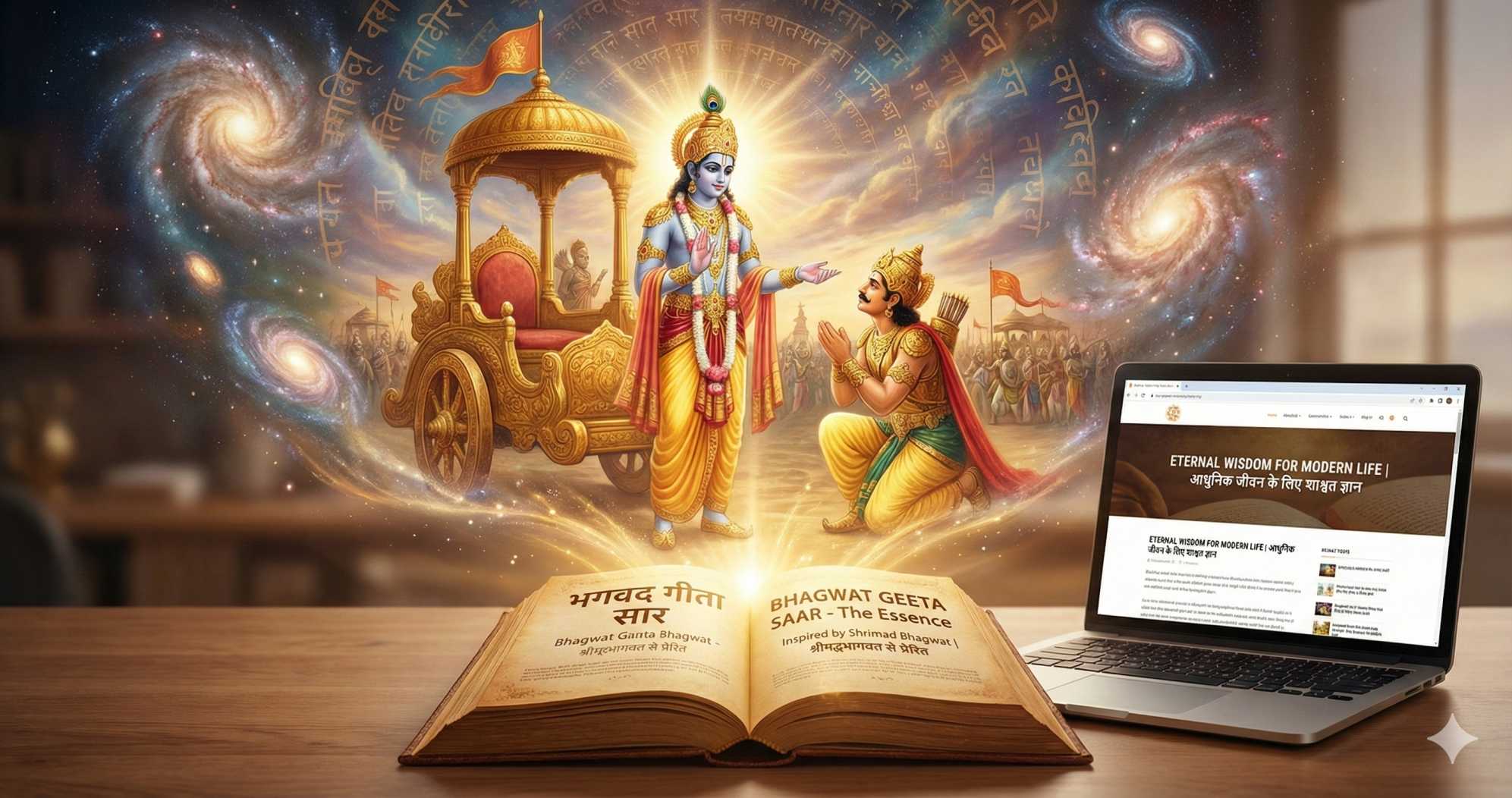
Bhagavad Gita Saar: From Kurukshetra to Kalyug – A Lesson for Every Arjuna
The Shrimad Bhagavad Gita is not just a religious scripture; it is a timeless guide to the art of living. Spoken by Lord Krishna to Arjuna on the battlefield of Kurukshetra, these 700 verses contain the essence of all Vedic knowledge. While the Shrimad Bhagwat details the glorious pastimes of the Lord, the Gita focuses on His divine instructions. In this blog, we will explore the “Bhagwat Geeta Saar” (The Essence of the Gita) and understand how it applies to our daily struggles.
The Soul is Eternal (Sankhya Yoga):-
The very first lesson Lord Krishna teaches is that we are not this body; we are the soul (Atman). The body is like a cloth that the soul changes. It is perishable, but the soul is imperishable, eternal, and indestructible. Weapons cannot cut it, fire cannot burn it, and water cannot wet it. Understanding this removes the fear of death and the grief of separation.
2. Karma Yoga: Do Your Duty Without Attachment:-
This is perhaps the most famous teaching of the Bhagwat Geeta Saar. Lord Krishna advises Arjuna to focus on his duty (Karma) without worrying about the results (Phala). When we work only for rewards, we become anxious and stressed. By dedicating our actions to the Divine, we free ourselves from the bondage of success and failure. This creates a peaceful mind and a focused life.
3. Control Over the Mind:-
The mind can be your best friend or your worst enemy. A controlled mind leads to self-realization, while an uncontrolled mind leads to destruction. The Gita teaches us that through practice (Abhyasa) and detachment (Vairagya), we can master our restless thoughts. Just as a lamp does not flicker in a windless place, a disciplined mind remains steady in meditation.
4. Surrender to the Divine (Bhakti Yoga):-
Ultimately, the Bhagavad Gita concludes with the path of surrender. Lord Krishna assures that those who surrender to Him with pure love are protected from all sins. This connection connects deeply to the stories found in the Shrimad Bhagwat, which illustrate the lives of great devotees who lived this path of surrender. Bhakti is the easiest and most profound way to attain peace.
5. The Three Modes of Nature (Gunas):-
The Gita explains why people act so differently. Everything in this material world operates under three modes (gunas): Sattva (goodness/harmony), Rajas (passion/activity), and Tamas (ignorance/inertia). These modes influence our thoughts, food choices, and actions. The goal of human life is to rise from Tamas to Rajas, then to Sattva, and ultimately transcend all three to reach the spiritual state.
6. Seeing Equality in All Beings:-
A person with true knowledge sees everyone with equal vision. Lord Krishna says that a wise person sees the same spiritual spark within a learned brahmin, a cow, an elephant, or a dog. This teaching destroys prejudice and fosters true universal brotherhood, reminding us that while external bodies differ, the soul within is the same.
To truly grasp the “Geeta ka saar” in Shri Krishna’s voice is to move from fear to faith, from confusion to clarity, and from loneliness to the eternal companionship of the Divine. He concludes with “Ma Shuchah” – Do not grieve. This is the ultimate solace for humanity.
While the Gita is the divine instruction of the Lord, the Shrimad Bhagwat is the beautiful enactment of these instructions in the lives of great devotees like Prahlada, Dhruva, and the Gopis.
Leave your comment